What are Global Disruptions? A global disruption is an event that causes significant changes to the economy, industries, technologies and people around the world, fundamentally altering how life operates on a global scale, for worse or for better. Geopolitical tensions caused by Trump’s implementation of tariffs, the effects of global warming on the planet, and the recent COVID-19 pandemic are just a few examples of global disruptions. But not every disruptor is negative.
The implementation of smart phones and generative AI are considered disruptors, but they created accessibility and convenience in our lives. Additionally, CRISPR technology has recently disrupted the healthcare industry, making it possible for scientists to edit DNA, offering promising future treatments for diseases and genetic mutations such as sickle cell anemia and beta-thalassemia.
How does technology work to predict the next major global disruptor?
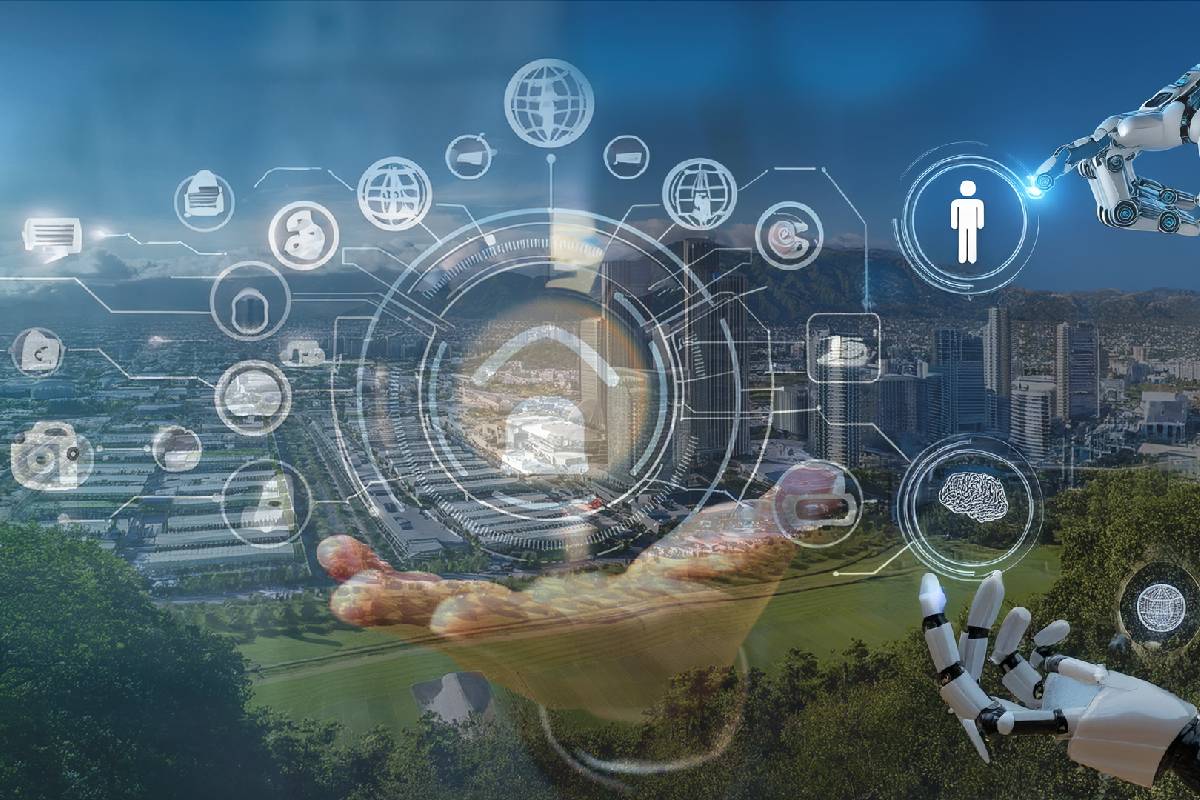
By aggregating big data through the use of machine learning, Artificial Intelligence (AI) can detect global patterns and warning signs of global crises. With access to satellite imagery, trade flows, rising debt, mortgage default rates, market instability, social media conversations, commodity pricing, polling trends, and military supply chains, there is simply too much data to make sense of at the human level. AI, on the other hand, can easily sort through this data, identifying patterns and making predictions instantaneously.
Using Tech to Predict Geopolitical Tensions
An example of predictive analytics that came to fruition through the use of AI was the Russian invasion in Ukraine. According to Dr. Charles Pierre Salvaudon d’Audiffret, a Geopolitical Professor at Albert School in Switzerland, he indicates that we had seen warning signs such as “troop deployments, fuel inventories, and rail logistics,” but he claims, “policymakers dismissed these predictions”.
This then begs the question: if technology really can predict the next major global disruptor, how can we ensure that leadership and policymakers effectively act on those hypotheses? After all, how can we know for certain that they will be accurate– especially since AI models are only as intelligent as the information they are trained on (i.e., past events, past patterns, and potential biases), leaving room for error?
Using Tech to Predict Infectious Disease and Epidemics:
As we saw with COVID-19, we weren’t prepared. But we learned an important lesson: in order to be prepared, we must monitor viral pathogens for which we don’t yet have treatments or vaccines. Since then, technology is being slowly rolled out to predict, monitor, and control the spread of infectious diseases.
For example, researchers at Harvard Medical School and the University of Oxford developed an AI tool called EVEscape. This technology can predict the variants most likely to occur as a virus mutates. So far, it has been used to predict future variants of SARS-CoV-2, but researchers are working to expand its application to other pathogens.
Technology can also help us determine the best practices for tracking and containing epidemics.
From AI tools like Dynamic Weighted GraphSAGE (DWSAGE), used to identify hotspots of infection linked to air travel, to early detection systems like EPIWATCH, which analyze the effects of wars on infectious disease epidemiology, it’s clear that open-source health intelligence systems are becoming increasing valuable.
Using Tech to Predict Supply Chain Challenges:
We can also leverage technology to help us prepare for future supply chain challenges. AI tools like interos.ai assesses geopolitical tensions, trade policy changes, and climate change disruptions to make supply chain predictions. A recent report from interos.ai had predicted shortages in electric vehicle (EV) components.
Why is it important for technology to help us predict the next global disruptor?
The bottom line is that when we can predict what’s to come, we can prepare properly, minimizing the impact. But are these predictions something that we can fully rely on? What if they lead us astray?
While it’s evident that AI is an incredibly powerful tool for predicting the next global disruptor, it goes without saying that we will always require competent, proactive policymakers to intervene. Their decisions must take into account missing information and potential biases. Over time, AI will eventually be able to provide us with more accurate and concrete information.
Despite Bill Gates believing that another pandemic will be the next disruptor, and Jamie Dimon arguing that geopolitics will be the cause of the next global disruption, we can’t say for certain which one it will be–at least, not yet.
Jackie Marson | Contributing Writer