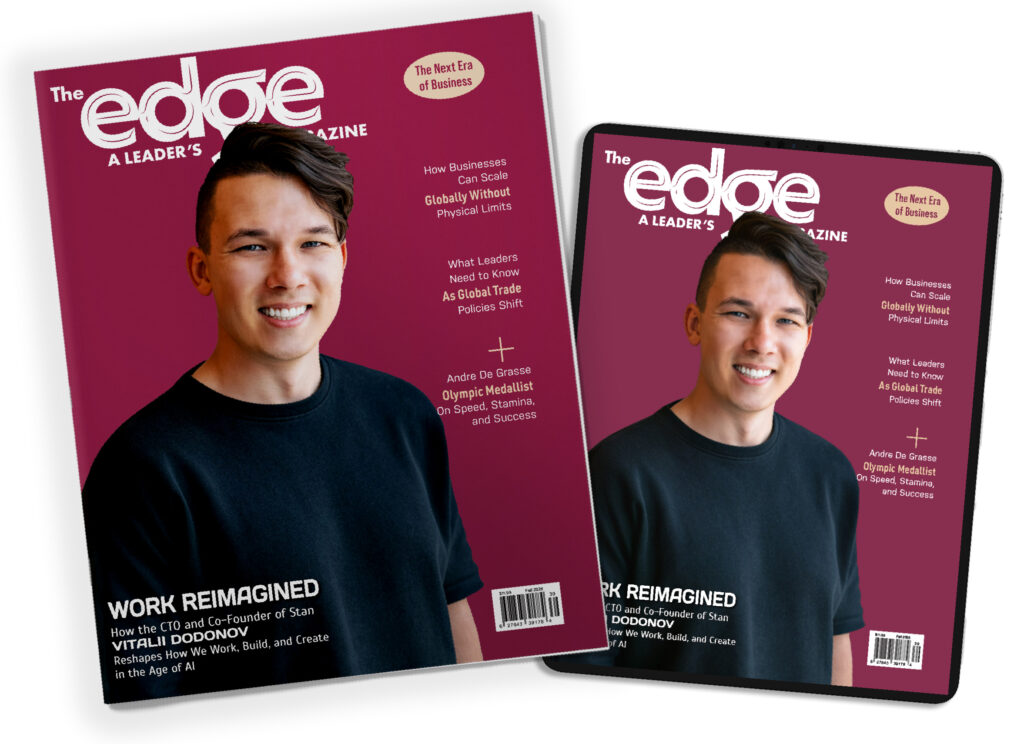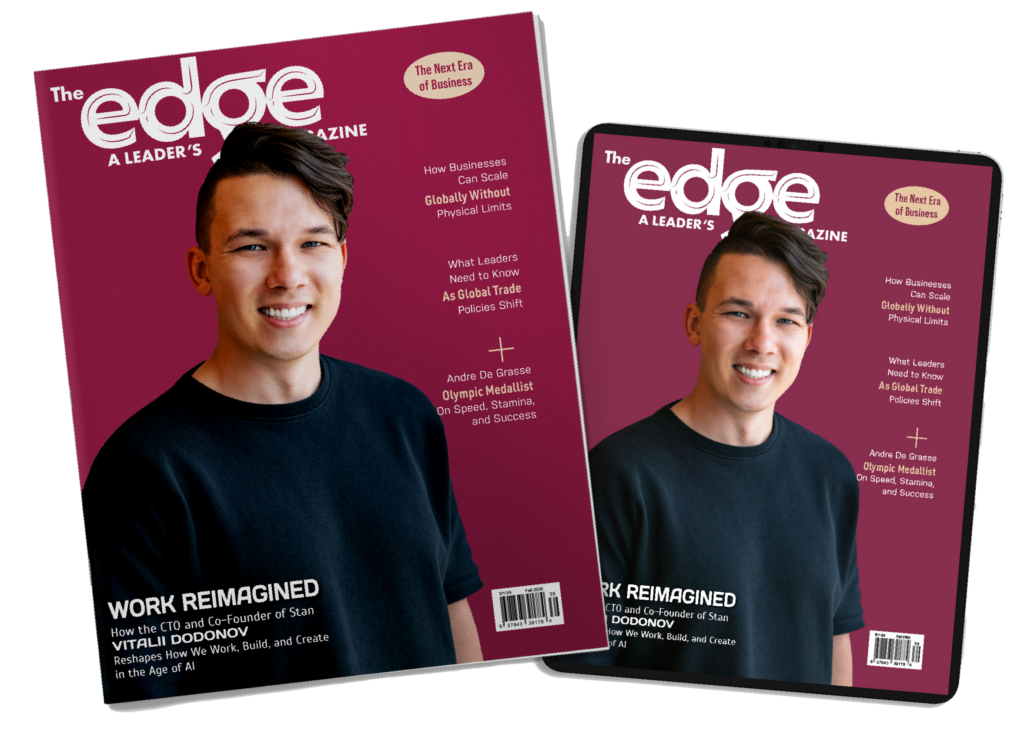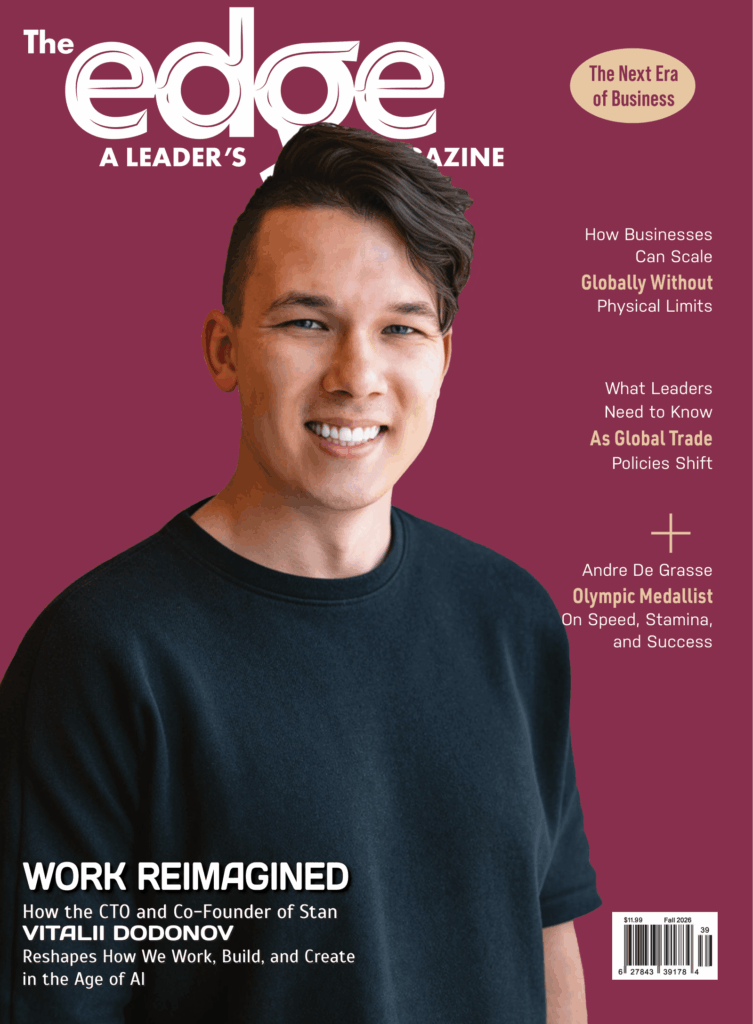


Long before Vitalii Dodonov built technology companies, he packed parachutes. He started working at 13, earned his skydiving licence at 15, and eventually completed roughly 800 jumps. It was an unconventional beginning, but one that introduced him early to responsibility, calculated risk, and the consequences of getting things wrong. Those lessons followed Dodonov from Russia to Canada, through a chemical engineering degree and corporate roles at Deloitte and eBay, and eventually into entrepreneurship. In 2021, he joined forces with John Hu to build Stan, a platform designed to help creators turn audiences and expertise into sustainable businesses. Today, more than 90,000 creators use the platform. But Dodonov’s ambitions now extend beyond helping creators monetize their work. With Stanley, Stan’s AI-powered “Head of Content,” he is exploring a larger question: what happens when technology dramatically reduces the time, people, and resources required to turn an idea into something real? For Dodonov, the answer is not simply greater automation. It is greater human autonomy. As AI takes on more execution, he believes judgment, direction, and the ability to decide what is worth building will matter even more.
Your entrepreneurial story began at 13, packing parachutes and taking hundreds of skydives. How did those early experiences shape your approach to risk, discipline, and self-reliance?
Packing parachutes taught me discipline and responsibility early on. When someone’s life depends on your work, there’s no room for cutting corners. Then, after getting my license at 15 and eventually making around 800 jumps, I learned that taking risks isn’t about being reckless; it’s about preparing, trusting yourself, and knowing when to commit. Skydiving is an expensive hobby, so many of my dad’s clients were successful businesspeople. Listening to them taught me to look at problems differently; there’s usually more than one way to get where you want to go. If something doesn’t work, you find another route. That combination of discipline, calculated risk, and resourcefulness has definitely stayed with me throughout my career.
After studying chemical engineering, you worked at Deloitte and eBay while pursuing your own ideas on the side. When did you realize entrepreneurship was where you belonged?
I wanted to work for myself since I was 17. Growing up around entrepreneurs through my dad’s work, I knew I wanted to build something of my own. But after college, I needed to earn a living, so I got a job. Most people can’t just quit and start a company, and I couldn’t either. So, I built on the side. Nights, weekends, whenever I could. While working at Deloitte and eBay, I gained valuable experience while testing my own ideas.
What problem did you and John see creators facing in 2021 that ultimately led to Stan?
I met John in 2021, after a customer introduced us. He’d left private equity to become a Creator, built a following on TikTok, and ran straight into the problem we initially built Stan to solve: there was no easy way to turn that audience into income. At the time, Creators pieced together different tools to sell products, services, and subscriptions, and it was far more complicated than it needed to be. I brought the technical expertise, while John understood the customer and the market. I strongly believed in the mission, so I quit everything and joined him full time.
Stan grew into a multimillion-dollar business with relatively little paid marketing. What drove that growth, and what did you understand about creators that others may have overlooked?
A lot of our early growth came from building closely with Creators. The early team was John, me, and our first founding engineer. John would reach out to Creators directly, get them using Stan Store for free, and bring their feedback back to us. I could then turn that feedback into product improvements. When Creators had a good experience, they shared Stan with their audiences, which created natural word-of-mouth. John being a Creator himself was a huge advantage, too. He understood the problem firsthand and knew what Creators actually needed, and not just what market research suggested they needed. I think that closeness to the customer was a big part of why we grew so quickly with relatively little paid marketing.
More than 90,000 creators use Stan to turn their audiences and expertise into businesses. What does their success reveal about the changing nature of entrepreneurship?
It shows that entrepreneurship is becoming more accessible. You no longer need a traditional company, a large team or significant upfront capital to build a business. If you have an audience, expertise, and something valuable to offer, you can turn that into income. What’s also interesting is how much more independent entrepreneurship has become. Creators can build businesses around their own skills and interests, rather than fitting into a traditional career path. That shift will only accelerate as technology makes it easier for people to build and run businesses themselves.
As Stan grew, the company eventually outgrew founder-led execution. What did that period teach you about your strengths and limitations as a founder?
Realizing that the way I worked as a founder had to change as the company grew was one of the hardest lessons. Early on, I was in the code every day and deeply involved in every product decision. That worked because, at that early stage, the founder’s taste really is the product. As we grew, I had to start thinking less about building the product myself and more about building the systems around it. Eventually, I had to stop asking, “what should we build?” and instead ask, “who should decide what we build, and what do they need from me to get it right?” It taught me that my strength is building the system that allows the team to build the product well. I had to get comfortable asking questions, listening more, and being even more deliberate about where I spend my time.
In London, you and John gave yourselves 14 days to build Stanley using AI-assisted development. What did that experiment teach you about how quickly ideas can now become products?
It showed me how much the cost and time of building have changed. We flew to London with a loose idea and one constraint: 14 days to build something from zero and get it to revenue. We didn’t have a roadmap or weeks to spend debating features. We started with a specific customer, built quickly, and used AI to handle much of the development work. I was learning new tools and technologies as we went, rather than waiting until I was comfortable with them. The biggest takeaway was that you can now go from an idea to something real incredibly quickly. AI doesn’t replace the need to understand the customer or make good decisions. Still, it dramatically shortens the distance between having an idea and testing whether people will pay for it.
How do you think AI will change the way companies are structured, staffed and scaled over the next several years?
We’ll see companies become much more flexible in how they’re structured and staffed. AI is already moving beyond being an assistant and starting to take on specific roles and workflows. We’ve been experimenting with this ourselves through what we call an “AI Office,” where different AI employees have different roles and can work in parallel. It basically means that one person can take on a much broader range of work without necessarily building a bigger team. I think the companies that figure out how to combine smaller, highly capable human teams with AI systems will be able to move faster and do a lot more with less.
As AI takes on more execution, which distinctly human skills do you believe will become more valuable?
Judgment and direction will become much more valuable. If AI can handle more execution, the human role becomes less about doing every task yourself and more about knowing what’s worth doing, giving it the right context, and deciding whether the result is actually good enough. I also think self-awareness becomes important. You need to understand where AI is useful, where it isn’t and where human judgement still matters. People who can combine clear thinking, good judgment, and curiosity with these new tools will be able to accomplish much more.
Stanley’s position as an AI is “Head of Content.” Where do you draw the line between amplifying someone’s voice and allowing technology to manufacture it?
General-purpose AI can create content that’s technically correct, but doesn’t really sound like you. That’s not what we’re building with Stanley. The goal is to understand the Creator’s voice and history, then amplify what makes them unique. I think of Stanley more as an AI employee or “Head of Content” that lives in your pocket, rather than an AI author. AI should help you do more of what you already do well, not manufacture a persona for you.
Considering that the creator economy extends beyond influencers to executives, professionals, and entrepreneurs, how significant do you think this shift could become?
More professionals are realizing that their expertise and perspective can be an asset in their own right. You don’t have to be an influencer to build an audience. An executive, founder, or specialist can use thought leadership to build credibility and build a business around what they know. I think we’ll see more people treat their personal brand and expertise as part of their career infrastructure, creating opportunities beyond traditional roles and industries.
Creators often build audiences on platforms they don’t own. With algorithms constantly changing, how important is ownership of customer relationships and distribution?
It’s incredibly important. Platforms and algorithms will change, but your relationship with your audience creates long-term value. That’s why we’ve built Stan to be independent of any one distribution channel and focused on the Creator. For Creators, that means turning followers into direct customer relationships, whether that’s through email, a storefront, or other owned channels. If a platform disappears or changes its algorithm, your audience shouldn’t disappear with it. The goal is to build a business that can move with the audience, wherever they go.
You and John have built Stan together through different stages of growth. What has made your partnership work, particularly when you disagree on an important decision?
We have different strengths and trust each other’s judgement. John is very close to the customer and the market, while I tend to think more about the product and technology. That gives us different perspectives when we make decisions, but once we make a call, we both commit and move forward. That trust keeps us aligned.
Can Stan maintain its culture of speed as the company grows without compromising judgment, quality or discipline?
I think speed is less about moving quickly and more about removing what slows you down. At Stan, 80 per cent of my meetings are 15 minutes. If someone is prepared, that’s usually enough. We also protect 9am to 12pm every day for deep work, with no meetings, calls or Slack. Our leadership meetings focus on decisions rather than updates, and anything that doesn’t require a live discussion can usually be handled asynchronously. That discipline lets us move quickly without sacrificing quality. We’re deliberate about where we spend our time, make decisions when a decision is actually needed and give people the space to do their best work.
Silicon Valley continues to attract Canadian technology companies and talent. What does Canada need to do differently to build and retain more globally competitive companies?
Canada has the talent and ambition to build globally competitive companies. The challenge is creating an environment where those companies can keep growing. That means making it easier for ambitious companies to attract exceptional talent, move quickly, and access the capital and networks they need to compete globally. Founders shouldn’t feel that the only way to build a truly global company is to leave Canada. There’s a huge opportunity to build companies here that are capable of competing anywhere in the world.
From teaching yourself English to leading a company generating millions in recurring revenue, your journey has changed considerably. How has your definition of success evolved?
Earlier in my career, I probably thought of success more in terms of what I could build and how quickly I could grow. Today, I think more about the kind of company we’re building, the people we’re able to bring together and the impact we can have over the long term. Success is having the freedom to work on problems I care about and building something that creates real impact.
Looking five years ahead, what do you want Stan to have changed about the way people build audiences, earn independently and create businesses?
I’m building toward a future where human work becomes increasingly optional, not because humans are replaced, but because machines take on more of the execution and people have more autonomy over how they spend their time. Waymo is an early example of this pattern: driving has become optional. Stanley is my first step in applying the same idea to knowledge work, and building toward a future where technology expands human choice. Longterm value creation is the objective, and I believe that technology is the medium to get us there.
by Jennifer M. Williams | Editor-in-Chief