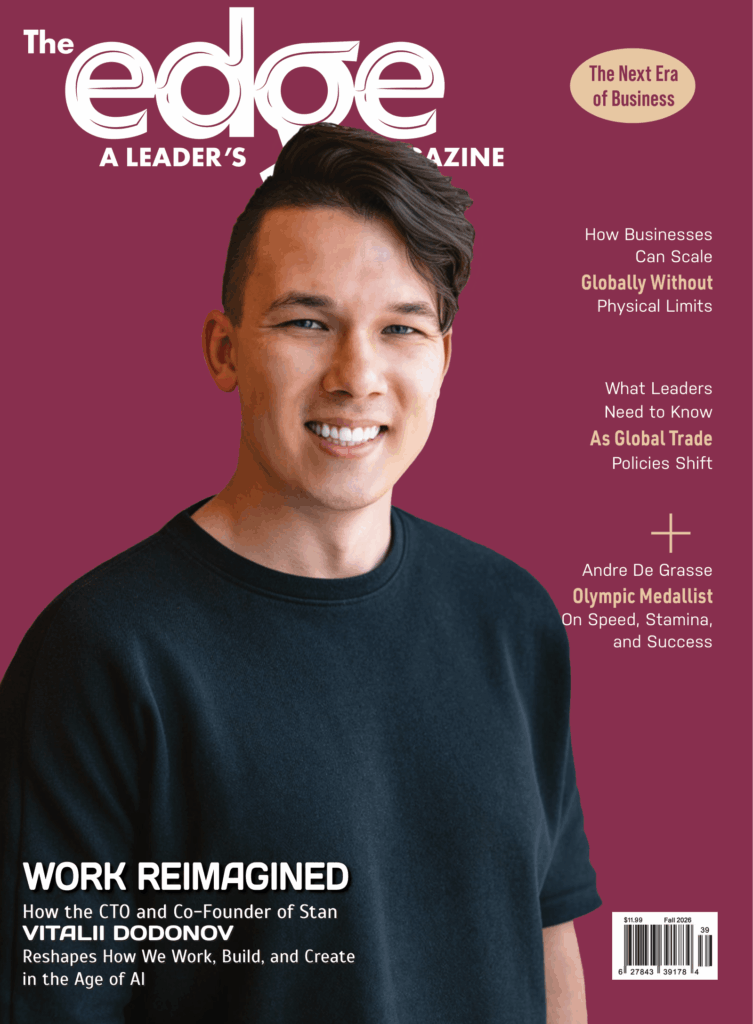
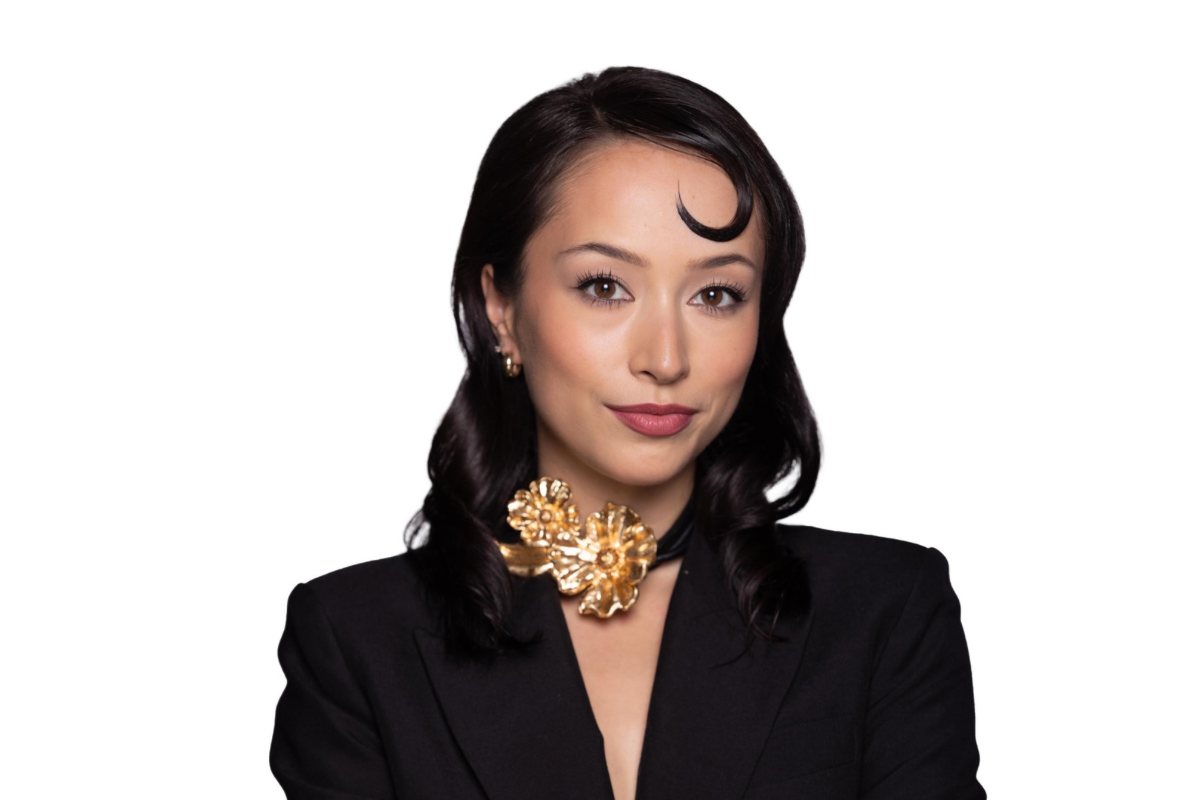
From invention to filmmaking, Andini Makosinski continues to expand the boundaries of creativity and innovation. First recognized internationally for her breakthrough ideas in sustainable energy and human-centred design, Makosinski is now exploring filmmaking and visual storytelling with the same curiosity and imaginative thinking that first brought her global attention. She gained worldwide recognition after developing a flashlight powered by the thermal energy of the human hand, an invention that challenged traditional ideas around accessibility and alternative energy. Her inventive approach later led to the creation of a mug that converts excess heat into power for mobile devices, reinforcing her ability to transform everyday experiences into purposeful design solutions.
While invention established her early career, Makosinski has increasingly embraced creative disciplines that allow her to explore ideas through a broader artistic lens. Drawing inspiration from both science and the arts, her evolving work reflects a growing interest in storytelling, visual expression, and the emotional impact of creative media.
Whether appearing on international platforms such as The Jennifer Hudson Show or speaking to audiences about innovation and creativity, Makosinski continues to encourage a new generation of thinkers to approach ideas without disciplinary boundaries.
In this issue of The Edge, we reconnect with Makosinski during a transformative period in her career, one shaped by experimentation, creative exploration, and a continued desire to build meaningful work across innovation and visual storytelling.
Looking back over the past few years, which moments have influenced your transition from inventor to creative producer and director?
I was always drawn to film, directing, and producing, but I didn’t know how to enter that world. I became known for my scientific work at a young age, and many people expected me to remain strictly within science and engineering. When I told people I was studying acting in New York or pursuing English literature and film studies, many were surprised because they assumed my path would stay entirely technical. The transition became more tangible after I moved back to Victoria in 2025. I began working more consistently as an associate producer, stylist, and director on creative projects. Even though I had many friends in the film industry, it still took time to understand the business and discover where I fit creatively. Moving into directing and producing did not feel like leaving science behind, but more like expanding into another creative language I wanted to explore for a long time.
From film and fashion to visual storytelling, you have embraced a range of creative disciplines. What inspired your move behind the camera, and what has that transition represented for you personally?
My journey began in front of the camera through interviews about science and inventing. Over time, I started hosting educational content, including two seasons of the financial literacy series Your World on Money. “I also hosted podcasts, such as the BBC Radio One series ‘Untold Legends – Hedy Lamarr'” on a BBC Radio One project about Hedy Lamarr, whose life beautifully combined Hollywood and invention. While working on those productions, I became fascinated by what was happening behind the scenes. I would spend time observing the film crews, asking questions, and learning how sets operated. Gradually, I became more involved creatively, helping with visual concepts, wardrobe direction, and script adjustments to make the dialogue feel more natural and authentic. Moving behind the camera represented stepping more fully into my creative voice.
During your speaking engagements, you often refer to an ‘Inventing Mindset’, both on stage and in your work. How does that way of thinking show up today within film and creative direction?
The Inventing Mindset shows up constantly in filmmaking, especially on independent or low-budget productions, where unexpected problems arise regularly. On set, you often have to think quickly, improvise, and solve issues creatively with whatever resources are available. I’ve become very comfortable stepping into multiple roles when needed, whether that means fixing props, adjusting costumes, or finding practical solutions during a shoot. A recent example happened during a music video filmed inside an old warehouse. We needed a poster to stay attached to a rusted wall long enough for a scene, but none of the tape was working. I realized I had gum in my handbag, chewed a few pieces, stuck them to the back of the poster, and it was a quick solution to our little problem. My inventing background has taught me how to approach challenges with logical questions and deductions, while filmmaking encourages instinct, emotion, and improvisation.
Your projects, including collaborations with artists such as Kiesza, Yung Gravy, Anoushka Shankar, Haviah Mighty, and bbno$, have gained attention. What do you look for in collaboration?
Collaboration is very important to me because creative work depends heavily on trust and openness. Some of the artists I’ve worked with came through personal relationships, while others were projects I joined as part of a larger production team. Working with Anoushka Shankar was especially meaningful because I’ve known her since I was young. She asked me to direct a visual project for one of her songs, and that became my first music video directing experience.
Other collaborations, including projects involving artists like Yung Gravy and Haviah Mighty, came through my work as an associate producer and stylist alongside another director in Victoria. Those experiences allowed me to learn how larger creative teams operate and how different artists approach visual storytelling. I enjoy working with people who are willing to experiment, improvise, and explore ideas together rather than remaining rigid about every detail. The best creative environments are usually the ones where everyone feels comfortable contributing ideas and evolving the project organically.
Moving from the subject in front of the camera to working behind it is a significant shift. What have you found most challenging and most rewarding about this transition?
I occasionally do on-camera work, whether through auditions, hosting, or commercial projects, so I understand how vulnerable acting can feel. What I enjoy most about directing is the creative freedom it provides. When you are the person in front of the camera, you are usually interpreting someone else’s vision. Behind the camera, I can actively contribute to how scenes are framed, how performances feel, and how the overall story comes together. One of the biggest adjustments has been learning to focus entirely on supporting others rather than being the visible center of attention. Directing requires shifting your energy toward helping everyone else feel confident, and safe on set in order to perform at their best.
Several of your early inventions were rooted in problem-solving through energy and design. How has your definition of innovation evolved in your current work?
My understanding of innovation has expanded beyond technology and engineering into communication, storytelling, and visual expression. In filmmaking, innovation often involves translating an abstract idea or emotional image into something physical and believable on screen. In both film and invention, you begin with an idea and work toward making it tangible. The difference is that filmmaking is far more subjective. With invention, there is often a measurable goal or functional outcome. For my Hollow Flashlight invention, it either worked or it didn’t. From there it was just constant experimenting to increase its brightness, or improve the physical design. Art is different because there is rarely one correct answer. You are constantly relying on instinct, interpretation, and trust in your creative team. That uncertainty can feel intimidating, but it is also part of what makes the challenge of filmmaking exciting for me.
You’ve appeared on global shows, including The Tonight Show with Jimmy Fallon, and The Jennifer Hudson Show. How has that visibility influenced the way you approach storytelling?
I try not to think too much about visibility while I’m working creatively, but I recognize that there are perhaps a number of young people who may be following my journey or feeling inspired by my life. I try to approach both my work and public presence with thoughtfulness and respect. I’ve always believed that how you treat people matters as much as the work itself. Whether I’m on set, speaking publicly, or collaborating online, I want people to feel heard and valued. I also hope that younger audiences may look at my path and realize they do not have to limit themselves to one identity. I hope people see that it’s possible to move between science, storytelling, design, and the arts without abandoning any part of yourself. And honestly, my mother still watches everything I post online, so that keeps me grounded.
What role does art play in how audiences connect with ideas and innovation as your work continues to bridge disciplines?
Art is essential to innovation because it shapes how people emotionally connect with ideas. Most successful inventions combine functionality, design, and human experience. Even something as ordinary as a phone reflects the collaboration between engineering and aesthetics. Technology may solve a problem, but art helps people connect with it emotionally, which is often what makes an invention, product, or story memorable. Creativity influences communication, atmosphere, and emotional response, while scientific thinking strengthens artistic work through experimentation and problem-solving. For me, those two worlds have never been separate. They constantly inform one another.
Publications such as Forbes Magazine and Entrepreneur recognized your work early in your career. In what ways has your perspective on recognition and success evolved?
When I first began receiving awards and recognition, I was very young and did not fully understand the significance of those honours. To the adults around me, they seemed like major milestones, but at the time, I was focused on creating, learning, and just surviving my school homework and being a teen! Over time, I came to appreciate how valuable that recognition was in opening doors and creating opportunities. It introduced me to people and industries I may never have encountered otherwise. Today, I’m grateful for the recognition I’ve received, but I also try not to let it define me. I’ve learned that growth sometimes means allowing yourself to evolve beyond what others expect from you.
Working as a stylist and Hair and Make-up Artist (HMUA) on film and television sets has given you a unique behind-the-scenes perspective. In what ways has that hands-on experience influenced your approach as a director?
Hands-on experience in styling, hair, and makeup has given me a much deeper appreciation for the collaborative nature of filmmaking. It has helped me understand the preparation, timing, and detail required behind the scenes to create a polished final image. Whether it’s adjusting makeup or helping shape a visual aesthetic, it still feels connected to building and creating with your hands. It has increased my respect for the people working behind the scenes, as hair, makeup, and styling teams contribute enormously to the final result, even though audiences often overlook their work. As I continue directing, I hope to create environments where every creative contribution feels valued and acknowledged.
Education and unconventional learning are often part of your story. Which experiences have shaped your creative and professional directions?
My childhood played a major role in shaping how I approach creativity. I was encouraged from a young age to use whatever was around me and turn it into something new. I would take discarded materials from around the house, use my hot glue gun, and build little inventions. They didn’t always work, but the process taught me to be resourceful and imaginative. I grew up with a strong balance of science and art. I was raised watching the silent films of Charlie Chaplin, Buster Keaton, and Harold Lloyd, listening to classical opera, and reading books about Old Hollywood stars from the 1920s and 1930s. At the same time, I was fascinated by insects, attended science camps, collected bugs from the garden, and took apart old electronics. I loved science, and I loved art – I didn’t regard them as separate subjects I would have to choose between, until university time came.
I met many young people in the entrepreneurship world who were taking risks by dropping out of school and building brands. My parents, who immigrated to Canada, encouraged a more technical and stable direction because they had worked hard to build their lives here, and wanted to make sure I was set up with a strong foundation.
How do you build trust and alignment while collaborating with others within a team?
For me, trust begins with listening. When I’m working with others, I try to understand their ideas and then find a way to offer feedback that supports both their vision and the project’s needs. In this industry, you are often hired for projects whose vision may not fully align with your personal taste. Hence, learning to respect someone else’s direction while still finding a creative point of connection is important. On my own sets, I prefer to work with people I trust and enjoy being around because production days can be long, intense, and demanding. As a director or producer, especially on smaller sets, part of the job is maintaining morale and both creative and physical safety on set. You have to encourage people, give thoughtful feedback, and help everyone feel confident in what they are doing. When the team feels good, the work is usually stronger.
What principles guide your decision-making as you continue to evolve across multiple creative disciplines, multiple platforms?
Honesty is very important to me, and I want to speak clearly when I think something could be stronger, whether that means saying a visual choice isn’t working or suggesting a better direction.
Kindness and patience are also essential. On set, there can sometimes be pressure, tension, or competition, and I try not to contribute to that. I believe in at first offering constructive criticism gently and then speaking up for yourself when your boundaries are not being respected.
Openness is another guiding principle. Once the basic structure of a scene is in place, I like leaving room for improvisation and discovery. Sometimes, the best moments come from something you never planned.
For emerging or upcoming creatives and innovators, what mindset or habits make the greatest difference in their journey? What type of mindset do you think they should have?
Resilience is vital. The creative industry comes with many ups and downs, and people will not always understand or support what you are trying to do. You have to believe in yourself before others do. One thing I’ve learned is that people often don’t believe you can do something until they see you doing it. Perfectionism can also become a major obstacle. I still struggle with it, especially with writing. Sometimes, I worry that the script or idea will not be good enough, and I procrastinate completing a project. I’ve realized it is better to create the work, share it, and keep improving than to wait forever for perfection. My advice is to start somewhere, anywhere It is far better to try, learn, and grow than to never begin because of fear. When I am older, I don’t want my biggest regret to be that I never tried new challenges or projects just because I was afraid of being embarrassed or made fun of. At the end of the day, nobody is thinking about you as much as you think they are. Live your life, and do you!
Looking ahead, what kinds of projects or ideas are you most excited to explore next?
I just had a music video called ‘Liquorice’ come out for the Vancouver Island band Dysaynia, and I also filmed a fashion film the brand Faie that I’m excited to edit and release later this summer. I’m hoping to continue developing more music video projects, narratives, and branded films, and am currently speaking with other artists about future collaborations long term, I am interested in starting my own production company in Victoria to build a creative platform that creates a positive working environment for artists and productions on the island.
I’m also interested in doing more on-camera hosting, including introducing classic films for Turner Classic Movies. I grew up loving old Hollywood, so that would be a very meaningful opportunity. Since returning to Victoria after living in New York, London, and Los Angeles, I’ve become even more aware of how visually rich the island is. There is such a variety of landscapes, from oceans and beaches to forests, mountains, historic homes, and modern spaces. I hope to help strengthen the local film scene, bring more productions to Victoria, and showcase the talented artists already working here.
Jennifer M. Williams | Editor in Chief